SEO blog
Hands-on guides on technical SEO, rank tracking, AI search visibility and automation.

No-Code Canonical and Meta Fix with SEOAsist Pixel: Technical Structure and Implementation
A step-by-step technical guide to fixing canonical, title and meta description issues with SEOAsist Pixel rules, without writing any code on your site.
Read the post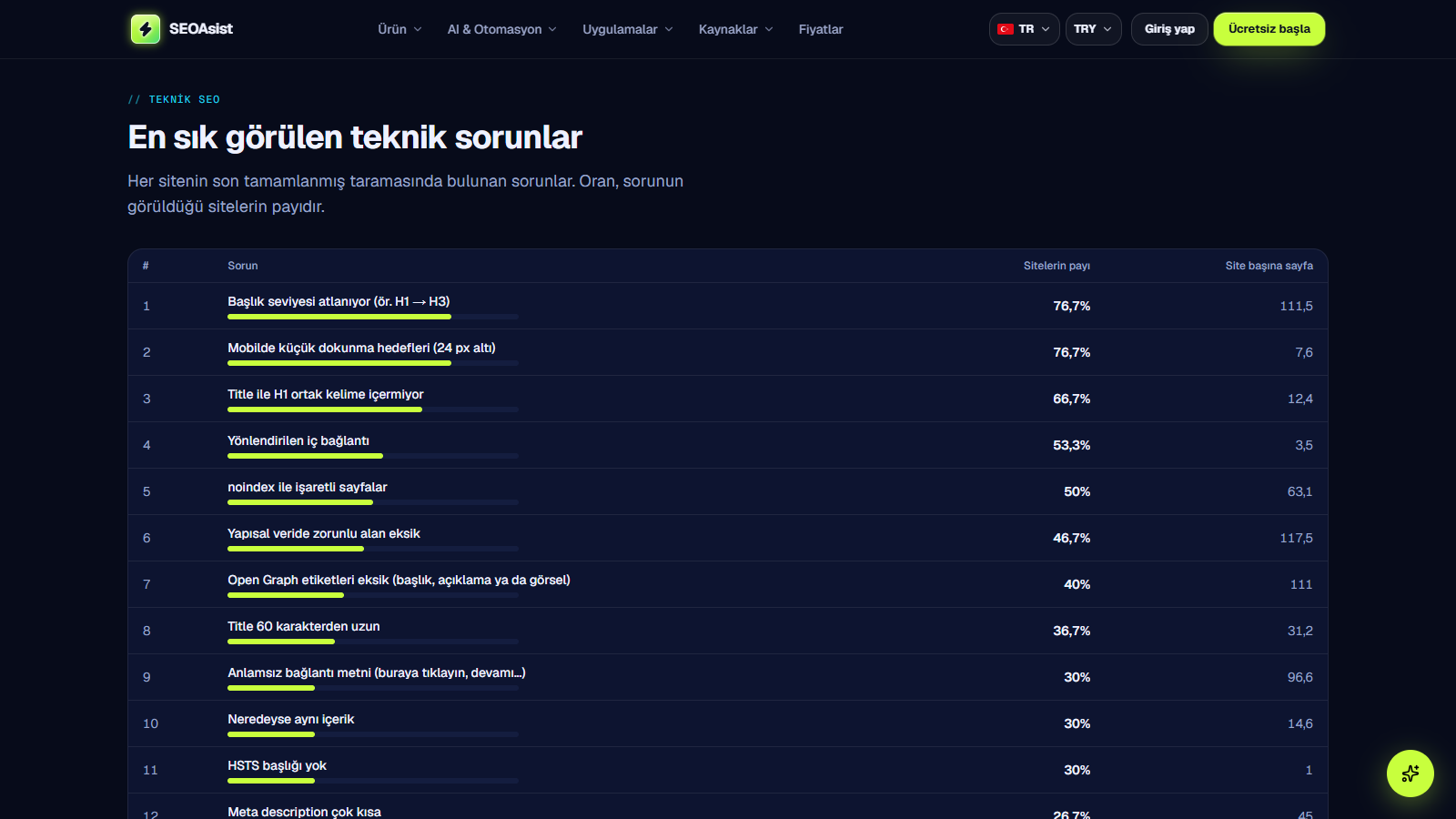
New Checks Added to the SEO Audit: JS Rendering, Mobile, Hreflang, Schema and AI Visibility
The crawler now opens JavaScript-rendered pages in a real browser, measures the mobile layout, compares schema against the page and separates the causes of traffic loss. Here is what was added and what to do when a finding appears.
Read the postServer-Side SEO Rules for WordPress and Shopify Sites: Pixel vs. Browser-Side
A technical guide to the difference between server-side SEO rules and the browser-side Pixel, and which one to choose for WordPress and Shopify.
Read the post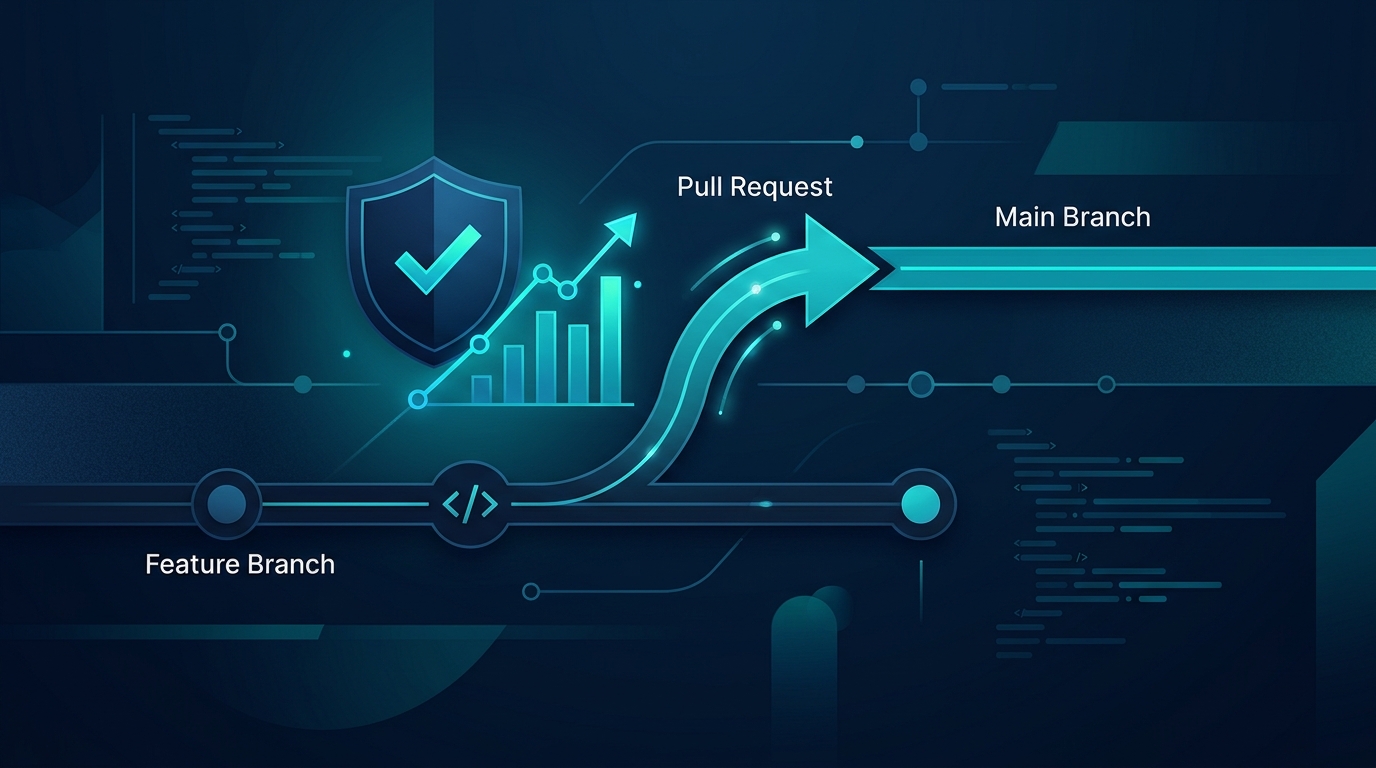
Automated SEO with GitHub: Pull Request Model and Approval Mechanisms
Automated SEO with GitHub means SEOAsist opens the issues it finds as pull requests instead of writing to your main branch, leaving the final decision to the site owner.
Read the post
Google AI Overview Visibility and SEO Automation Guide
What is AI Overview, how do you measure your site's visibility, and which SEO steps actually work? A short, technical and practical guide.
Read the post
llms.txt Generation: Introduce Your Site to AI Bots Correctly
llms.txt generation is a way to introduce your site's most important pages to AI systems with a short, organized file. This article covers what the file contains, how to generate it and how to monitor bot access.
Read the postHow to Measure Backlink Quality: Metrics to Check and Free Analysis Methods
A good backlink comes from a relevant, real site, sits inside the content and uses a natural anchor text. Here are the metrics to check and how to run a backlink analysis for free.
Read the post
What is SEOAsist? Eliminate Your SEO Workload with an Autonomous SEO Platform
SEOAsist is an autonomous SEO platform that crawls your site, produces a 7-dimension analysis and a 30/60/90-day plan, and fixes issues through pull requests and Pixel.
Read the post
AI Visibility and AI Search Optimization: ChatGPT SEO Guide
AI visibility is how often your brand is mentioned and cited in answers from ChatGPT, Gemini, Perplexity and Claude. This guide covers measurement, metrics and strategy steps.
Read the post
How to Do Competitor Analysis With SERP Tracking Tools
A step-by-step guide to finding your real competitors with SERP tracking tools, comparing rankings on shared keywords and winning a share of SERP features.
Read the post
AI Crawler Tracking: Why You Need to Track 19 AI Crawlers, llms.txt & Access Policy Guide
AI crawler tracking allows you to see which AI bots can access your website. Learn step by step how to set up your access policy using llms.txt and robots.txt.
Read the post
Online SERP Tracking & 7-Dimensional Analysis to Protect Ranks
Traditional online SERP tracking tools only alert you to rank drops without pinpointing why. Protect your rankings at the root with 7-dimensional SEO analysis and autonomous code-level fixes.
Read the post
Root Cause Analysis: How AI Fixes Recurring SEO Issues in Code
Traditional SEO audits only report symptoms. AI-driven root cause analysis uncovers the source of recurring issues at the template and code levels, permanently resolving them with automated Pull Requests (PRs).
Read the post
What is Autonomous SEO? AI Agent Model and Usage Steps
Autonomous SEO is a model where an AI-powered agent continuously handles crawling, planning, and fixing. Learn how the agent works, where it requests approval, and how to set it up.
Read the post
What Is Generative Engine Optimization (GEO)? AI Search Guide
Generative engine optimization (GEO) is the effort to get your content cited in answers from ChatGPT, Claude, Gemini, Grok, and Perplexity. Learn how GEO differs from SEO, how to measure visibility, and how to prepare your pages step by step.
Read the post
Automated Pull Request SEO Fixes with SEOAsist Pixel: Code-Level Problem Solving
SEOAsist Pixel applies your approved rules instantly in the browser via a single-line script, while automated pull request SEO fixes make the exact same change in a separate repository branch. Discover their differences, use cases, and safe workflow.
Read the postWordPress SEO Plugin vs Autonomous SEO: Which Is More Effective?
While traditional WordPress SEO plugins only offer suggestions, autonomous SEO systems resolve issues themselves via code-level pull requests and in-browser SEOAsist Pixel.
Read the post
AI-Powered 7-Dimensional SEO Analysis: 30-Day Ranking Boost
The 7-dimensional SEO analysis holistically examines your site's technical, content, and authority gaps. With an AI‑driven 30/60/90‑day plan, achieve ranking gains in the first month.
Read the postAI Model Turning SEO SERP Tracking Data into Action
Traditional SEO SERP tracking tools only report ranking drops. SEOAsist analyzes position losses and autonomously resolves them via AI-driven PR and Pixel interventions.
Read the post


Get your first crawl in 5 minutes
Start on the free plan, add your sites, connect Search Console. Bring your team and clients when you are ready.
On our own sites (9), 45 tracked keywords climbed into the top 10.
- Auto-fix on every site in your plan
- 14 days free, no card
- Price fixed for 12 months
- Fixes stay on your site if you cancel
- Free setup
